
NE 034/06
National Standard of pH
Content
The pH unit is a physicochemical unit, originally defined by Søren Sørensen in 1909 as the decimal logarithm of the reciprocal value of hydrogen ion activity.
Realization of pH Measurement
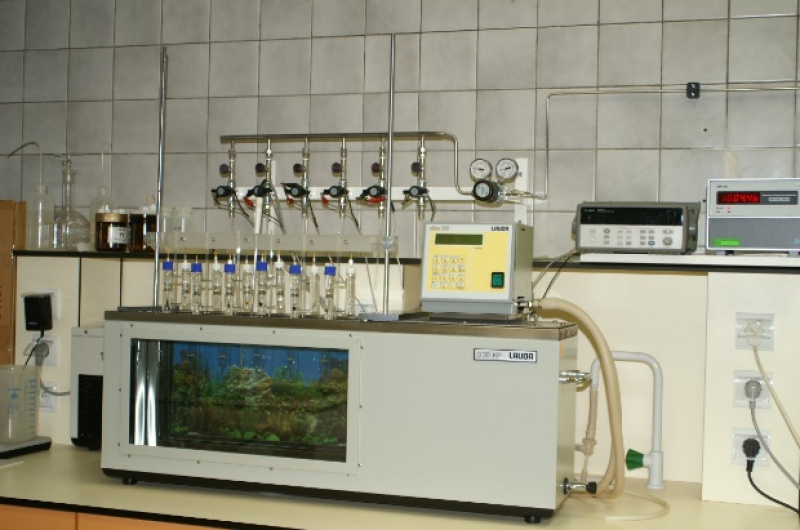
The pH scale is realized by measuring the potential in a Harned cell, which consists of:
- A hydrogen electrode
- A silver-silver chloride electrode
Importance of pH Measurement
The pH value is a critical parameter in almost all aspects of human life, affecting:
- Biological and chemical processes
- Physicochemical and technological reactions
- Environmental and industrial applications
Even slight pH changes can have significant consequences:
- A one-unit change in blood pH can be fatal.
- Living organisms thrive only within specific pH ranges.
- Soil acidity influences crop yields.
- Chemical reactions can be reversed or controlled by altering pH levels.
This underscores the importance of pH monitoring in health, industry, agriculture, and environmental sciences.
Documents for download
-
Osvedčenie (certifikát) (pdf, 780.9 kB)